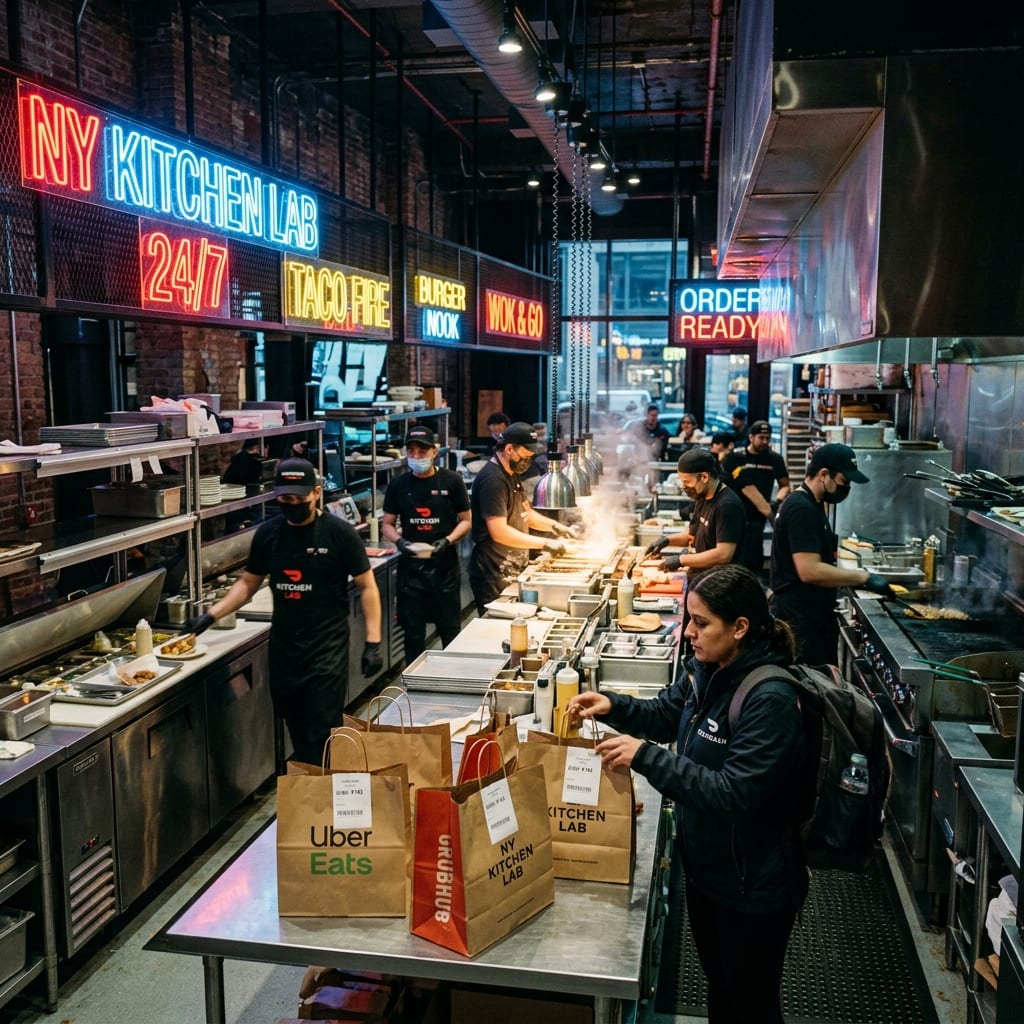
The rise of the ghost kitchen (or dark kitchen) has transformed the restaurant industry. By eliminating front-of-house overhead, operators can run multiple virtual brands from a single prep space. However, this hyper-efficiency brings a new challenge: managing an overwhelming influx of digital orders from half a dozen different delivery platforms.
Without the right technology, a ghost kitchen quickly devolves into chaos.
The Aggregation Layer
If your kitchen staff is monitoring six different tablets for UberEats, DoorDash, Deliveroo, and direct orders, you are losing valuable time and increasing your error rate. The foundation of a ghost kitchen tech stack is an aggregator.
Your aggregator intercepts orders from every third-party app and funnels them into a single, unified dashboard. This eliminates the "tablet farm" and ensures no order is missed in the noise.
The Brain: Kitchen Display Systems (KDS)
Once aggregated, orders must be routed efficiently. A paper ticket rail is entirely insufficient for a high-volume ghost kitchen juggling multiple menus.
You need a robust Kitchen Display System (KDS). A modern KDS will:
- Route specific items to specific prep stations (e.g., all burgers to the grill, all salads to the cold station).
- Color-code orders based on their virtual brand.
- Alert staff when a courier is 2 minutes away, ensuring food is handed over piping hot, not sitting on a shelf.
Direct Ordering and QR
Even ghost kitchens can benefit from direct ordering. If you have a pickup window or a small waiting area for couriers and locals, deploying a QR Code Menu allows walk-up customers to order directly from your system, bypassing the exorbitant 30% commission fees of third-party apps.
Analytics and Brand Iteration
The beauty of a ghost kitchen is agility. If your virtual taco brand isn't performing, you can shut it down on a Monday and launch a virtual smashed burger brand on a Tuesday.
Your tech stack must provide granular analytics. You need to know not just your total revenue, but the profit margins of individual items across different brands. By relying on rigorous data rather than gut feeling, you can continuously iterate your menus for maximum profitability.